

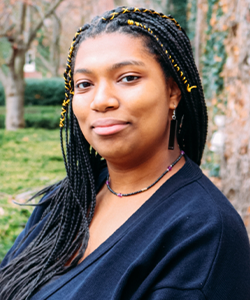
Epiphany Adams, LMSW
Second-Year PhD Student
Epiphany Adams believes mental health care should actually reach the people who need it most. Her research is driven by a simple but urgent question: Why are Black, Hispanic, and LGBTQ+ college students left out of the mental health support systems built to help them? She digs into the discrimination, access barriers, and systemic gaps that keep students from getting care, not because she finds it academically interesting, but because she's experienced these barriers herself.
That same drive is present in her clinical work. As a trauma-informed therapist at Long Island EMDR and a psychotherapist at Union Settlement, she shows up for her clients as a full person, often bringing comedy and geek culture into the room to build trust in ways traditional therapy often doesn't.
Epiphany is a first-generation college student, and the first student and graduate of Harlem Grown — a community she carries with her everywhere work takes her. She remains an active speaker and advocate for the organization, knowing firsthand what it means when someone believes in you before you believe in yourself.
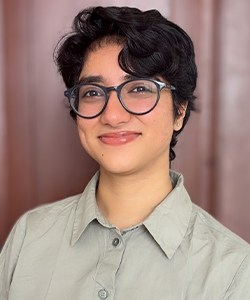
Supriya Bedi, MSW
Second-Year PhD Student
Supriya Bedi's long-term goal is to build community structures that provide mental health, economic, and social support. Her current research examines how exclusion from formal systems of care shapes health outcomes for workers in India’s unorganized sector. Using data from the Longitudinal Aging Study in India (LASI), she studies how occupational hazards affect their health and is expanding this work to include other social determinants such as education, social support, and the gender and caste dynamics that influence them.
Supriya holds a Master of Social Work (MSW) with a specialization in clinical and community practice. She spent a year as a Gandhi Fellow, collaborating with local administration and NGOs to improve education, health, water and sanitation, and governance outcomes, followed by a year as a psychiatric social worker.
Her master’s thesis examined psychological distress among salt-pan workers in Tamil Nadu. This experience deepened her interest in epistemic injustice — particularly how pedagogical and mental health frameworks fail first-generation learners from marginalized backgrounds — and reinforced her long-standing commitment to social entrepreneurship and environmental conservation.
- Bedi, S. (2026, March 25). Socio-economic Determinants of Common Mental Disorders among Salt Pan Workers in Marakkanam, Tamil Nadu. Economic and Political Weekly.
- Bedi, S. (2021, April 17). The Dynamics of Social Mobility, Land Inequalities and Occupational Structures in Punjab Since the Colonial Period: Some Observations. Mainstream Weekly.
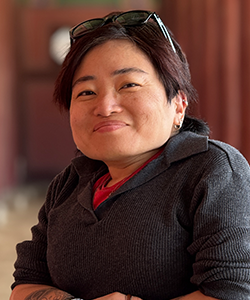
Mia Ives-Rublee, MSW
First-Year PhD Student
Mia Ives-Rublee is interested in using a mixed-methods approach to evaluate how policy decisions affect access to resources, particularly for disabled people and racial minorities.
Mia previously worked at the Center for American Progress as the senior director of the Disability Justice Initiative. Before that, she worked as a confidential assistant at the EEOC, research assistant at UNC's Department of Emergency Medicine, and counselor at the NC Division of Vocational Rehabilitation Services.
She was also appointed by President Joe Biden to the Advisory Commission on Asian Americans, Native Hawaiians, and Pacific Islanders and served as a co-chair for the Health sub-committee.
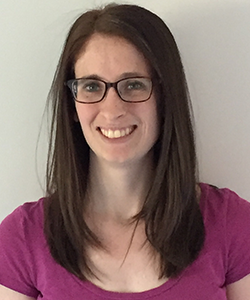
Courtney Kidd, LCSW, MSc
Third-Year PhD Student
Courtney Kidd's research focuses on emotional artificial intelligence and human-robot interaction, with a particular interest in bringing a social-emotional robot into pediatric oncology settings to support children and families navigating cancer care. She earned her MSW from Stony Brook University and her MSc in science and technology innovation studies from the University of Edinburgh, where her research explored affective computing in video game design.
As an LCSW, Courtney’s career has spanned policy, research, and private practice. She has also taught undergraduate and graduate students at several universities, with Stony Brook University serving as her primary academic home, where she finds her greatest joy in engaging with students across a variety of classes.
Outside of academia, Courtney is a devoted Broadway fan, enthusiastic traveler, and firm believer that humor belongs in both life and learning. When she is not working or planning her next outing with family or friends, she can usually be found spending time with Dougal, her corgi and highly opinionated research assistant.
- Kidd, C. (2026, May 26). “Just Do It?” Not So Fast: Why Trust in AI Needs an Interdisciplinary Theoretical Reboot. The Journal of Consumer Affairs.
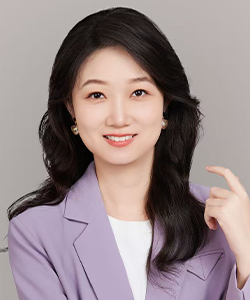
Xiao Liang, MS
Third-Year PhD Student
Xiao Liang's research interests center on health disparities among adolescents, particularly focusing on sexual and reproductive health. Her research explores how social and structural factors, like insurance coverage and urban-rural disparities, shape adolescents’ access to STI testing and other preventive healthcare services.
Through her research, she hopes to better identify and address barriers to sexual health services experienced by adolescents from underserved communities and make contributions to policies and interventions that promote health equity among adolescents.
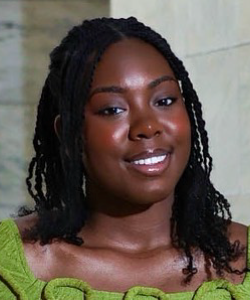
Chelsey R. Noel, LMSW, M.Min
First-Year PhD Student
Chelsey R. Noel's research interests include the social determinants of mental health in Haitian communities, with a particular focus on how faith-based institutions function as informal mental health systems and shape pathways to care. She is interested in examining the intersections of trauma, culture, religion, structural barriers, and health equity in immigrant and post-disaster contexts.
Drawing on her background as a minister and trauma-informed practitioner, Chelsey aims to conduct community-engaged, policy-informed research that advances culturally responsive mental health care for Haitian populations in the United States and Haiti.
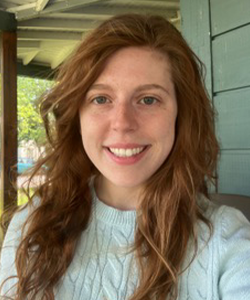
Madelyn Wilson, LMSW
First-Year PhD Student
Madelyn Wilson earned a bachelor’s degree in psychology, a Master of Social Work (MSW), and a graduate certificate in women and gender studies from West Virginia University. During her master’s program, she completed the Rural Integrative Behavioral Health Training (RIBHT) program.
Madelyn holds her LMSW and has experience in domestic violence services and as a school-based therapist, both in rural settings. Madelyn is passionate about reproductive justice and healthcare access for all people but takes special interest in rural and Appalachian populations. She aims to use her research to address disparities, remove barriers, and eliminate stigma pertaining to accessing comprehensive reproductive care.
